PGL on future developments at the Aviation Market Congress

Redefining technology management, hyperautomation, and the deployment of digital twins are to shape the development of the Polish Aviation Group in the years to come. The Polish Aviation Group’s representatives discussed their development plans and challenges, including those related to recruiting personnel for the aviation industry, during the Aviation Market Congress in Warsaw.
According to CEO Radosław Stępień, modern technologies will largely determine the direction of PGL’s development. According to the head of PGL, companies are now challenged with handling increasingly more processes in a more optimal and flexible manner. Automation is therefore becoming a key tool that facilitates and accelerates rolling out changes.

Just a few years ago, when we wanted to implement a major change, it took up to a year. Now, we can make a change to a process or system and implement it within a month – noted Radosław Stępień.
Next step on the road to process automation is to support changes with artificial intelligence. – With limited human resources, we can use AI to handle some of these processes directly
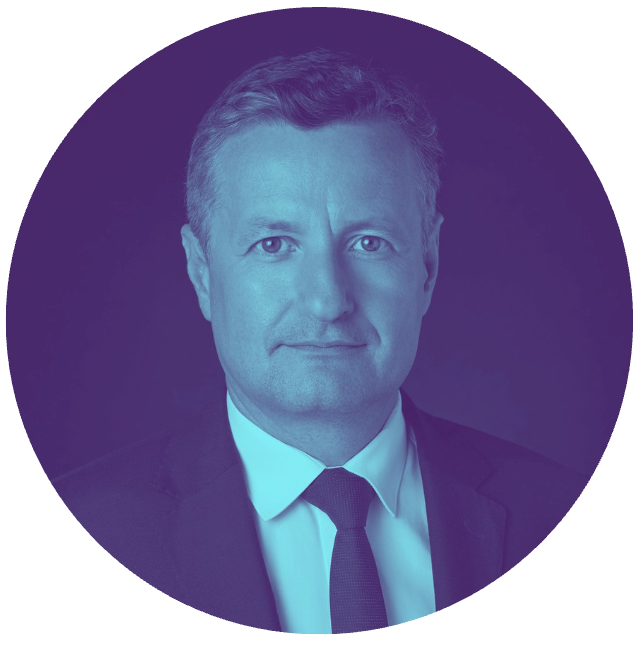
Radosław Stępień,
CEO, PGL
The CEO highlighted the potential of so-called digital twins, which could have a major impact on projects like the construction of Centralny Port Komunikacyjny. As he emphasised, with a digital model of the airport, it is easy to have staff trained to operate the entire facility. Likewise, simulations help to practise change management and validate the functioning of various processes in practice.
An airport is a sophisticated organisation, which is why, as he explained, with its digital model at hand, its components, such as enterprise management systems, can be recreated step by step and then tested in virtual conditions. This approach not only facilitates employee training, but also reduces costs, errors and the risk of accidents.
LOT on carrier’s future
During the Aviation Market Congress, Michał Fijoł, CEO of LOT Polish Airlines, presented plans for the national carrier’s development. For LOT, which is currently expanding at Chopin Airport, the biggest obstacle is the number of air operations performed.
- Our idea for growth at Chopin is to offer larger aircraft on specific routes – said Michał Fijoł.
As recently as 2016, LOT did not operate any narrow-body aircraft with more than 164 seats. Today, there are nearly 30 of them. – And this number will be increasing – announced the LOT’s CEO.
Also, LOT is constantly seeking additional slots at Chopin Airport, which is why it welcomes the announced expansion of the airport, looking forward to the possibility of launching new routes. – We have already announced ten new destinations this year. I’ve just announced Stavanger in Norway, and we’re about to fly to Marrakesh – said the CEO, assuring that the airline hasn’t said its last word in this regard.
Some of the new connections include regional airports. – The Krakow-Paris route is already operational, and flights from Gdańsk to Istanbul will launch soon – announced the CEO.
The management board is also mindful of the quality of passenger service, which is constantly improving. This has been recognised by our objective external partners. According to Skytrax, we are now a four-star airline. We were also awarded the title of the best airline in our part of the world, said Michał Fioł.
How to win over new employees?
Anna Wiszniewska, HR Director at LS Airport Services, highlighted the challenges facing the labour market. As she spoke from the handling agent’s perspective, the key issue today is to recruit employees with potential and a drive to develop, as ready-made skills are simply not available on the market.
Our handling processes involve operating specialised hardware not commonly found outside of airports. That is why our internal recruitment and training processes are crucial – they enable us to prepare our employees for their daily tasks on the apron and in the terminal.
LS Airport Services focuses on “recruiting potential”. – We recruit individuals passionate about this industry, who will be able to develop and navigate in a highly volatile environment, and then we train them from scratch – she explained.
The specific challenges relate to managing the younger generation, for whom handling operations are often their first job ever.
Therefore, rookies often lack a role model for behaviour at the workplace. In her opinion, it is crucial to build awareness among young employees that what they do matters to the entire organisation, including achieving key parameters in terms of timeliness and safety. – These two indicators must always go hand in hand – emphasised the LSAS HR Director.
With future staff in mind, LS Airport Services is establishing partnerships with schools, mainly technical ones. The objective is to show young people what it is like to work at an airport. This year, some 300 young people have already completed internships at LS. – This is a large group of young students in whom we invest our time and the efforts of our coaches – said Anna Wiszniewska, adding: – We receive a great support from teachers at the schools with which we collaborate.
Educational path required
Tomasz Krzeszowski-Waloszek, HR Director at LOT Aircraft Maintenance Services, stated that the industry’s concern is not a shortage of manpower, but rather a lack of employees with specific licences to operate certain types of aircraft. – What gives me sleepless nights as HR director is not having the right number of people, but having the right number of certified staff who can carry out a specific duty – he said.
He noted that the issue of costs overlaps with the problem of hiring specialists. – The world of MRO and aircraft engineers is flexible enough that it is not particularly difficult to recruit mechanics even from the other side of the world, but this has a significant impact on costs, contract value and our margin.
The problem LOTAMS faces is that there is a large number of employees approaching retirement age. These are highly experienced employees with valid licences, but who are approaching the end of their professional careers. This demographic gap is difficult to fill.
– Today, the regulations are structured in such a way that to get a licence, you need to have practical experience. I don’t see much of a problem with attracting young people, nor with keeping them on track to obtain their licences. The problem starts once they have their licences – said Tomasz Krzeszowski-Waloszek. – There is a very high turnover of engineers in the industry. You simply can’t retain these people. For very different reasons, including personal ones, they migrate all over the world – he said.
With future staff in mind, LOTAMS runs special programmes aimed at students, including one that ends with the signing of contracts with selected graduates. A company representative admits that there is no shortage of young people with a passion and knowledge of aviation. However, there is one major problem: – Vocational education lacks VET teachers – points out Tomasz Krzeszowski-Waloszek. He also pointed out the need for activities promoting careers in the aviation industry among primary school pupils. – We lack programmes that would allow us to “catch” them earlier – he said, emphasising that the aim is to enable pupils interested in working in the industry to choose the appropriate secondary school.
